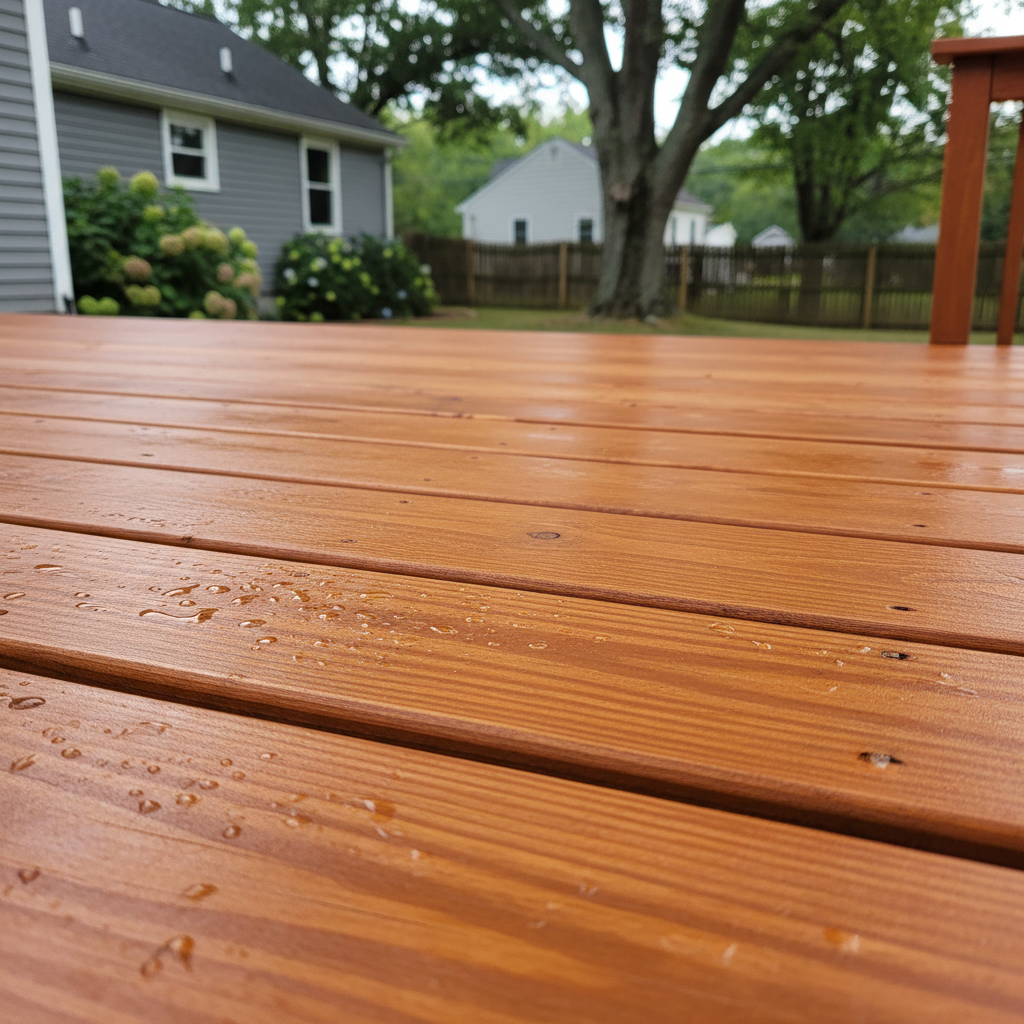
Alright, let's talk decks. Specifically, what you put on 'em to keep 'em looking good and lasting long. I get a lot of calls and questions about whether to paint or stain a deck, and honestly, there's no single right answer for everyone. It really depends on your deck, your budget, and what you're hoping to achieve. So, I've rounded up the most common questions I hear from folks right here in Providence and I'm gonna lay out the straight facts for you.
Should I paint or stain my deck? What's the real difference?
This is the big one. The main difference comes down to how they protect the wood and what kind of look you're after. Paint sits on top of the wood, forming a thick, opaque layer. It completely covers the wood grain, offering a solid color finish. Think of it like a shield. Stain, on the other hand, penetrates the wood fibers. It comes in various opacities – clear, semi-transparent, semi-solid, and solid. Clear and semi-transparent stains let the natural wood grain show through, while solid stains offer more color but still allow some of the texture to be seen. Paint offers more protection against UV rays and moisture because it's a thicker film, but it's also more prone to chipping and peeling over time, especially with the kind of freeze-thaw cycles we get here in Rhode Island.
How long does deck paint or stain actually last?
Good question, and the answer varies. A good quality deck stain, especially a semi-transparent or solid one, usually lasts anywhere from 2 to 5 years. Clear sealers might only give you a year or two before needing a refresh. Paint? If it's applied perfectly to a well-prepped surface, you might get 5 to 10 years out of it. But that's the ideal scenario. The reality is, paint on a deck takes a beating from foot traffic, furniture, and our New England weather. It's more likely to start showing wear, chipping, or peeling in high-traffic areas within 3-5 years. When paint fails, it's a much bigger headache to fix than stain.
What kind of prep work is needed before painting or staining?
This is probably the most crucial step, and where most DIYers mess up. You can buy the most expensive paint or stain on the market, but if the surface isn't prepped right, it won't last. First, you need to clean the deck thoroughly. I mean really clean it. Power washing is usually the way to go, but you have to be careful not to damage the wood. Use a good deck cleaner to get rid of dirt, mildew, and old, loose finishes. Then, you've gotta let it dry completely – and I mean bone dry. That can take a few days, especially if we've had a lot of humidity or rain, which is common around here in the spring and summer. After that, any loose boards need to be secured, popped nails hammered down, and any rough spots or splinters sanded smooth. If you're going from paint to stain, or if the old finish is really failing, you might even need to strip it entirely. It's a lot of work, but it's non-negotiable for a lasting finish.
Can I stain over old paint, or paint over old stain?
Generally, no. Not if you want it to last. Stain needs to penetrate the wood, and paint creates a barrier that prevents that. So, if you try to stain over paint, it'll just sit on the surface, look awful, and peel almost immediately. Painting over stain is a bit more feasible, but you still need to make sure the old stain is completely clean, dry, and not peeling or flaking. You'll likely need to sand it down to create a good adhesion surface. My advice? If you're changing finishes, assume you'll need to strip the old one off completely. It's more work upfront, but saves a ton of headaches down the road.
What's the best time of year to paint or stain a deck in Providence?
Timing is everything. You need a stretch of dry weather, ideally with temperatures between 50 and 85 degrees Fahrenheit. That means spring or early fall are usually your best bets here in Rhode Island. Summer can work, but you've got to watch out for those really hot, humid days or sudden thunderstorms. You don't want to apply finish in direct, scorching sunlight, as it can dry too fast and not penetrate properly. And definitely don't do it if rain is in the forecast within 24-48 hours of application. We've seen too many projects ruined by an unexpected shower. Give yourself plenty of buffer time.
Is it worth hiring a professional, or can I DIY it?
Look, I'm a contractor, so you might think I'm biased. But I'll tell you straight: if you're handy, patient, and have the right tools, you can absolutely DIY it. The key is patience and meticulous prep work. However, if you're short on time, don't have a power washer, or just hate tedious work, hiring a pro is often worth the investment. We've got the experience, the equipment, and we know how to handle tricky situations – like decks with multiple levels or those old, weathered boards you see on some of the older homes around College Hill. A good pro will also know which products perform best for our specific climate. At Skyline Decks Providence, we do this stuff all the time, so we know the drill. It's about getting a finish that looks great and actually lasts.
What about composite decks? Do they need painting or staining?
Nope, not usually. That's one of the big selling points of composite decking. It's designed to be low maintenance, resisting rot, insects, and fading. You might need to clean it periodically with a composite deck cleaner to get rid of dirt, pollen, or mildew, but you won't be painting or staining it like you would with natural wood. If your composite deck is looking faded or stained beyond cleaning, there are some specialized composite deck restorers or coatings out there, but they're not nearly as common or necessary as traditional wood finishes. If you've got a composite deck, you've already sidestepped this whole paint vs. stain debate, which is pretty nice.